Focused turf problem review

Artificial Turf Repair

Artificial turf repair starts with diagnosis of seam, edge, infill, surface, base, or drainage problems, then weighs a localized correction against partial or complete replacement.

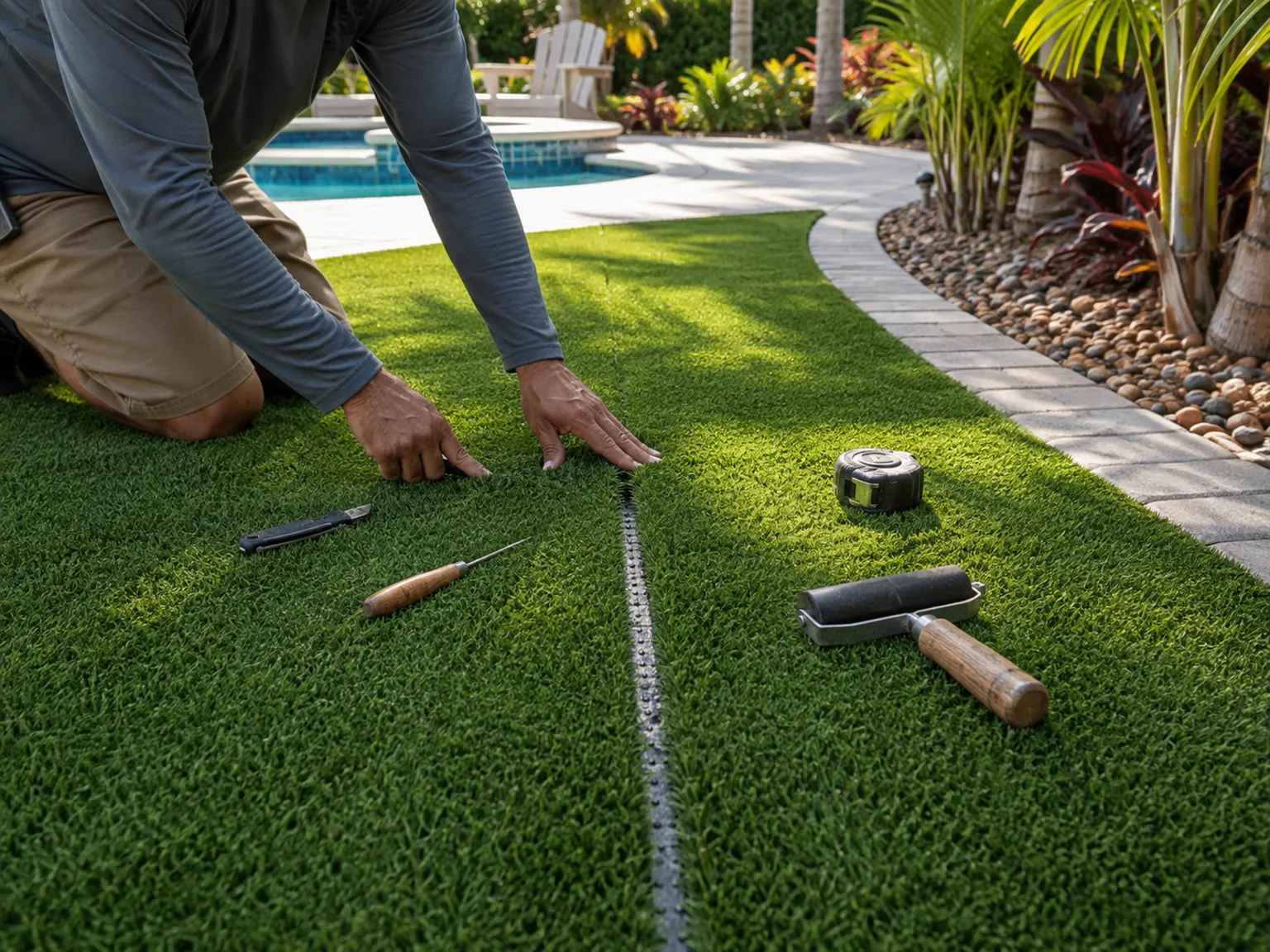
Artificial turf seam alignment and infill finishing work

Diagnose before patching

A visible turf defect may begin above or below the surface

An opening seam, lifted edge, wrinkle, low spot, missing infill, stain, burn, tear, or worn path describes what can be seen. It does not identify the cause by itself. Traffic, poor attachment, material damage, base movement, roots, erosion, standing water, or an outside repair can produce similar symptoms and require different corrections.

A useful repair assessment records the location, size, age of the installation if known, recent changes, water behavior, nearby hardscape, and whether the concern is spreading. Wide and close photographs can narrow the first questions, but lifting or opening the affected area may be necessary to understand the seam, backing, restraint, or base.
Repairable conditions

Localized damage is a stronger repair candidate than widespread failure

A focused repair may fit a short seam opening, a loose perimeter, displaced infill, a small damaged section, or a localized base depression when surrounding turf remains serviceable. The boundary needs enough sound material for a secure connection, and access must allow the area to be opened without creating a larger uncontrolled tear.

Multiple failing seams, broad wrinkles, extensive fading, widespread contamination, repeated settlement, or a failing base can point toward partial or complete replacement. Water returning to the same low area, erosion at an edge, or roots lifting a larger section also indicates that the underlying condition matters more than closing the visible surface.

Repair approach

The affected area is opened only as far as needed to correct the cause

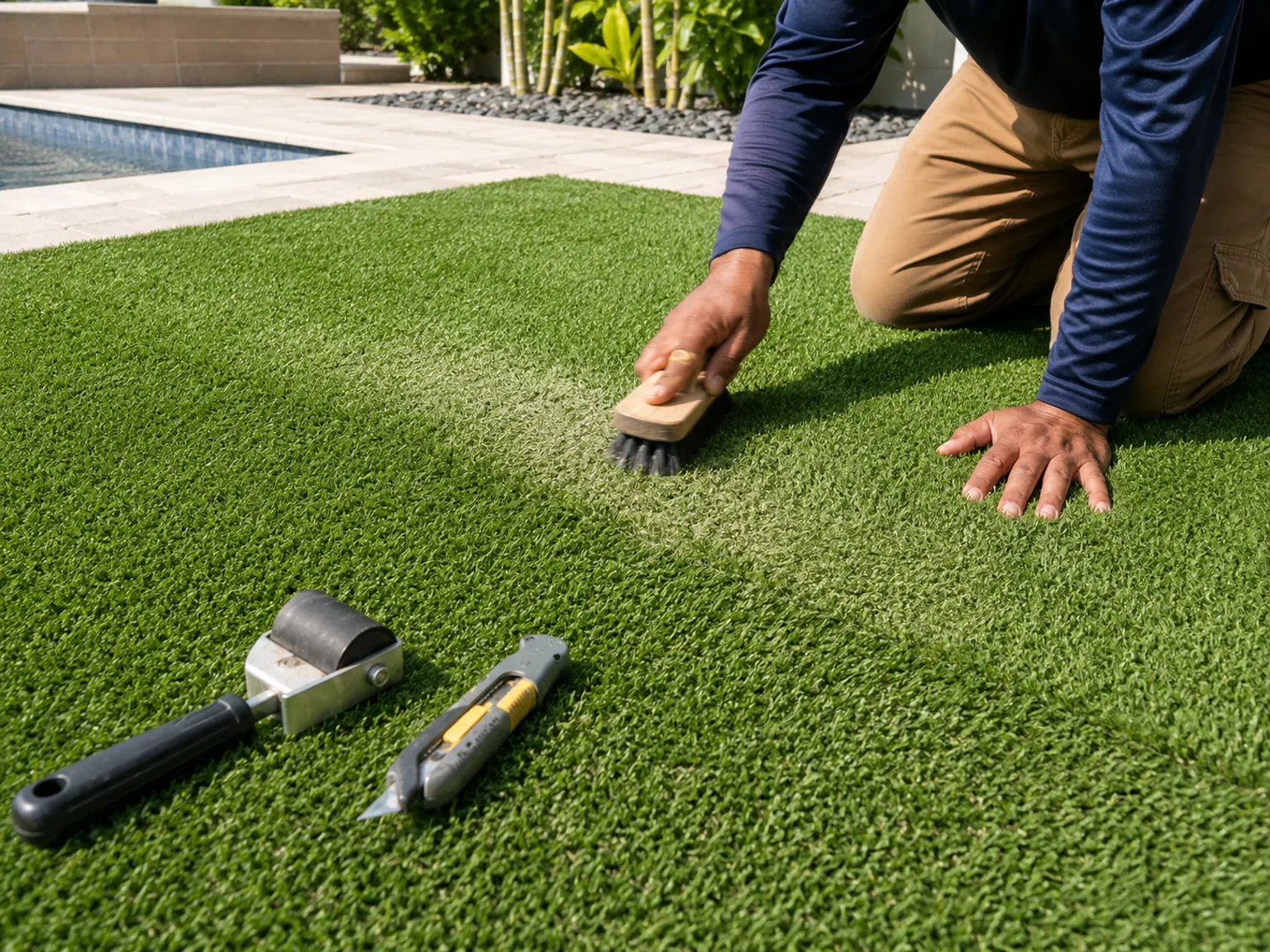
For seam separation, the adjoining pieces are checked for backing condition, alignment, contamination, tension, and available overlap before new joining material is considered. Lifted edges require inspection of the restraint and adjacent grade. Displaced infill is redistributed or replenished only after the reason for movement, such as runoff or concentrated traffic, is understood.

Localized surface damage may be trimmed to a deliberate patch boundary when compatible material is available. A soft or settled area may require lifting the turf, removing unstable base, rebuilding and compacting the affected zone, and restoring grade before the surface is reset. Drainage correction extends only as far as the confirmed repair scope allows.

Localized artificial turf repair finishing work near a seam or edge.

Scope and repair expectations

The estimate should identify diagnosis, repair boundary, materials, and visible limits

A repair scope should state the observed condition, investigation included, turf area to be opened, seam or edge work, base correction allowance, drainage work if any, patch material, infill, grooming, cleanup, and what happens if broader damage appears. Clear boundaries prevent a small repair description from quietly becoming an undefined reconstruction project.

Owners should expect some repairs to remain visible. New material may differ in color, sheen, pile height, blade shape, and wear; a restored seam can still be noticeable from certain angles. The goal is a sound, usable correction within the agreed area, not a promise that old and new materials will become indistinguishable.

Limits and aftercare

Recurring movement or water can make replacement more sensible than repeated patches

A repair is unlikely to hold if the base continues to settle, runoff keeps removing material, roots remain active beneath the boundary, or surrounding turf is too weak to support a join. When matching material is unavailable or failures appear in several locations, moving to a larger replacement boundary can provide a clearer result than adding separate patches.

After repair, the area should be kept clear according to the handoff guidance, then observed through normal traffic and rainfall. Seams, edges, infill, repaired base, and the original symptom need periodic checks. Prompt debris removal and compatible cleaning protect the work, while renewed lifting, softness, or ponding signals that the underlying condition needs another look.

Repair conditions in Deltona

Heavy rain can expose weak edges, low base, and blocked water routes

Central Florida storms can turn a minor low spot into a clear ponding area and can move loose infill or base material at an unrestrained edge. Irrigation leaks and runoff from patios or roofs may create the same symptom repeatedly. Seeing when and where water appears helps separate surface damage from a drainage cause.

Strong sun, reflected heat, shaded moisture, roots, and organic debris can produce different wear across one turf area. These exposures matter when choosing a patch boundary and comparing replacement material. They do not prove a cause on their own, so the repair remains tied to the condition that can be confirmed at the affected area.

Turf repair questions

What photographs help with an artificial turf repair assessment?

Include a wide view showing location and surrounding edges, close views of the symptom, a size reference, and images taken after rain when water is involved. Note when the problem appeared and any recent traffic, digging, landscaping, or hardscape work.

Will a turf patch or repaired seam be invisible?

No invisible result should be assumed. Existing wear, sun exposure, color, pile direction, sheen, infill, available replacement material, lighting, and the repair location all affect appearance. A repair can restore function while leaving a visible boundary.

Can a repair correct an underlying drainage problem?

A localized grade or base correction may fit the repair when the water source and route are confined to that area. Broader runoff, failed irrigation, blocked property drainage, or repeated settlement may require separate work or a larger replacement boundary.

When is replacement more practical than repair?

Replacement becomes more reasonable when failures are widespread, surrounding turf is weak, matching material is unavailable, several seams are opening, contamination is extensive, or the base problem extends beyond a stable patch boundary. Diagnosis should establish that extent first.

Ready to discuss this turf project?

Share the property details in an estimate request, or call to talk through the area and the work you have in mind.