Turf around play areas

Playground Turf

Playground turf planning coordinates preparation, drainage, seams, perimeter restraint, equipment clearances, project-specific cushioning requirements, access, inspection, and ongoing maintenance without making blanket safety claims.

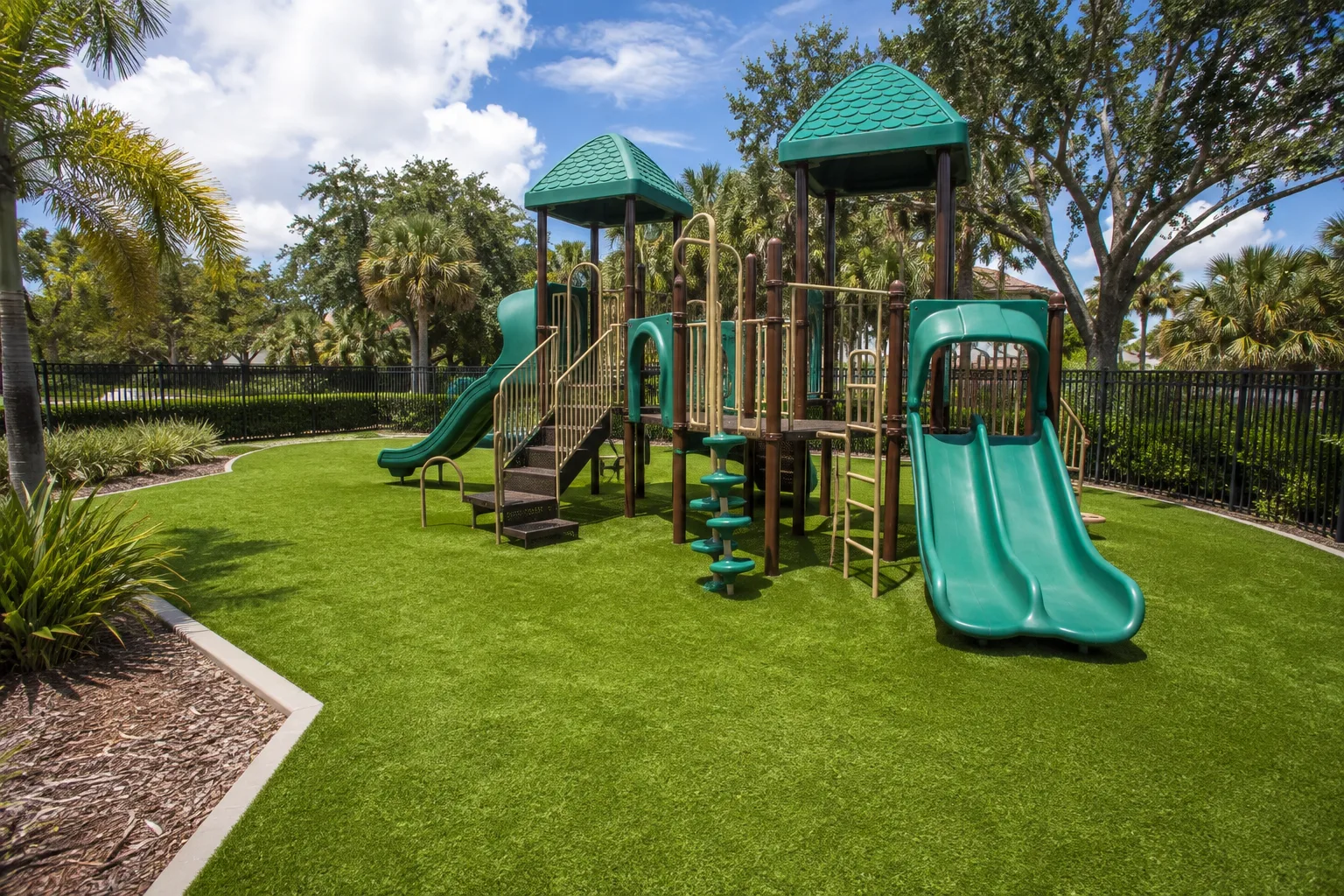
Artificial turf boundaries and circulation around an empty play structure

Treat surfacing as a system

Playground turf must be coordinated with the actual equipment and use

A play area is more than an open patch of synthetic grass. Equipment footprints, use zones, entry paths, gates, borders, nearby hardscape, drainage, and the selected surfacing assembly all affect the layout. The turf layer has to work with the base and any project-specific cushioning component rather than being treated as a safety feature by itself.

The intended users and equipment information provide the starting point. A residential play set, a managed community area, and an open activity zone can have different requirements. Available manufacturer documents, project criteria, clearances, anchoring details, and inspection responsibilities need to remain connected to the surfacing scope.
Fit and site conditions

Boundaries, elevation, access, and water movement define the workable area

Turf may provide a consistent play surface where the footprint can be prepared, drained, edged, and kept accessible for inspection. Existing equipment, roots, settled ground, exposed anchors, steep changes, drains, irrigation, and connections to concrete or pavers must be mapped before removal or base work is established.

Equipment clearances cannot be inferred from a photograph or turf sample. The actual model, layout, height, use zone, anchoring, and applicable project requirements control those decisions. Where required information is unavailable, the surfacing scope should remain open rather than assigning a fall-height or impact classification that has not been verified.

Preparation and construction

Stable base work and secure boundaries support the finished play surface

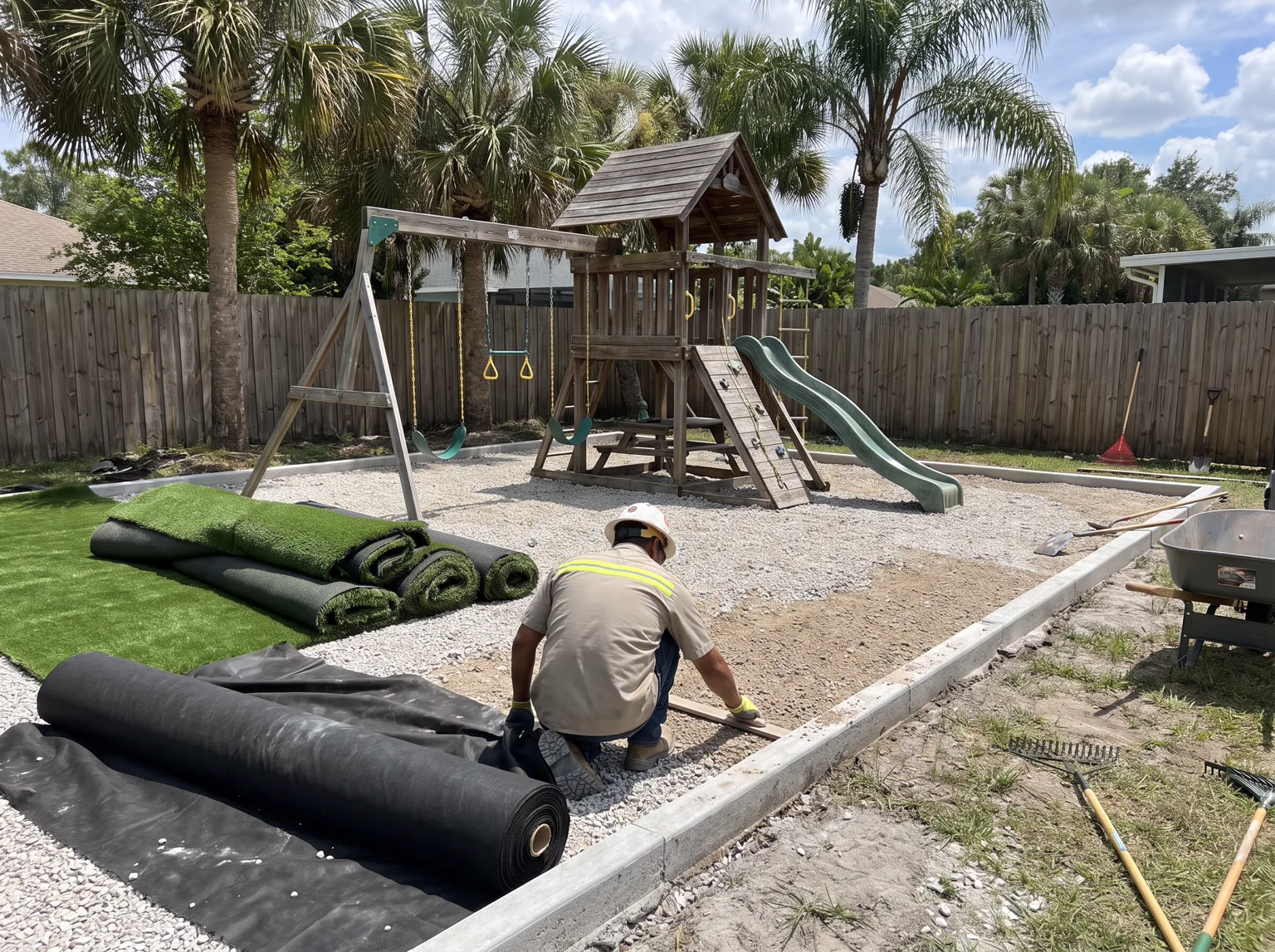
Unsuitable vegetation, loose material, or an older surface is removed to the agreed boundary and depth. The exposed area is graded for the intended drainage route, then the specified base and any cushioning layer are placed and compacted or assembled according to their requirements. Equipment supports, drains, and access points remain visible and protected through this work.

Turf orientation and seams are planned around the shape, equipment, and primary traffic paths. Perimeter restraint and transitions reduce loose edges at fences, walks, and entry points. Cuts around posts or anchors require deliberate clearances, and infill is installed only as part of the selected system before final grooming and a documented surface review.

Playground turf perimeter and cushioning transition beside play equipment.

Scope and handoff

The written scope should identify every layer and responsibility

An estimate needs the play-area dimensions, equipment information, access, removal, grade, drainage, base, cushioning assembly if required, turf, seams, edges, infill, transitions, and cleanup. It should distinguish turf installation from equipment work, structural anchoring, certification, or independent safety review unless those services are specifically provided by qualified parties.

During active work, children and other users need to remain outside the area. At completion, the owner or property manager should receive material information, care guidance, and any inspection responsibilities tied to the selected assembly. Ongoing use still requires attention to debris, displaced infill, open seams, lifted edges, settlement, and changes around equipment.

Limits and ongoing inspection

No turf surface removes the need for equipment-specific review and maintenance

This page does not assign a fall-height rating, impact result, or universal safety outcome. Those determinations depend on a specific tested assembly, installation details, equipment, use zone, and project requirements. Turf may also be a poor fit where drainage cannot be corrected, roots are actively disrupting the surface, or required clearances cannot be maintained.

Routine inspection should look for debris, holes, lifted boundaries, seam movement, exposed components, low areas, displaced infill, and changes around posts or anchors. Cleaning and grooming follow the installed materials and use. Damage, settlement, or a change to the equipment deserves evaluation before the affected area returns to normal use.

Central Florida play areas

Rain, sun, irrigation, and tree debris influence inspection frequency

Heavy Deltona rainfall can expose low areas, blocked drainage routes, and erosion at an unfinished edge. Water arriving from roofs, patios, irrigation, or surrounding grade needs a clear path. A dry appearance soon after one storm does not establish how the complete assembly will respond through repeated wet conditions.

Strong sun can raise surface temperature, while shade can hold leaves and moisture around equipment. Trees may contribute roots and organic debris near the boundary. These conditions affect location, transitions, cleanup, and inspection planning, but they do not support a blanket statement about surface temperature, drainage performance, or maintenance intervals.

Playground turf questions

What equipment information is needed before planning playground turf?

Provide the equipment model or available documents, layout, anchoring, surrounding dimensions, entry points, and known project requirements. That information helps define clearances and surfacing boundaries without guessing at use zones or treating the turf layer as an equipment specification.

Does playground turf carry one universal fall-height rating?

No. Any impact or fall-height requirement applies to a specific tested surfacing assembly under defined conditions. Turf, cushioning, base, installation, equipment, and use zones must be coordinated. This page does not assign a classification or promise a safety result.

Why does drainage matter beneath a play surface?

Standing water can soften the base, move material, slow drying, and conceal changes near seams or equipment. Existing grade and incoming runoff need an appropriate route through or around the assembly, with drains and transitions kept accessible for inspection.

What should ongoing playground-surface inspections cover?

Look for debris, open seams, lifted edges, holes, low areas, displaced infill, exposed components, and changes around posts, anchors, drains, or transitions. Inspection frequency follows use, weather, equipment guidance, and the selected surfacing system rather than one universal schedule.

Ready to discuss this turf project?

Share the property details in an estimate request, or call to talk through the area and the work you have in mind.