Turf spaces shared with pets

Pet-Friendly Turf

Pet-friendly turf planning connects drainage, base preparation, secure seams and perimeters, infill, cleanup access, concentrated traffic, digging behavior, and realistic odor-management limits.

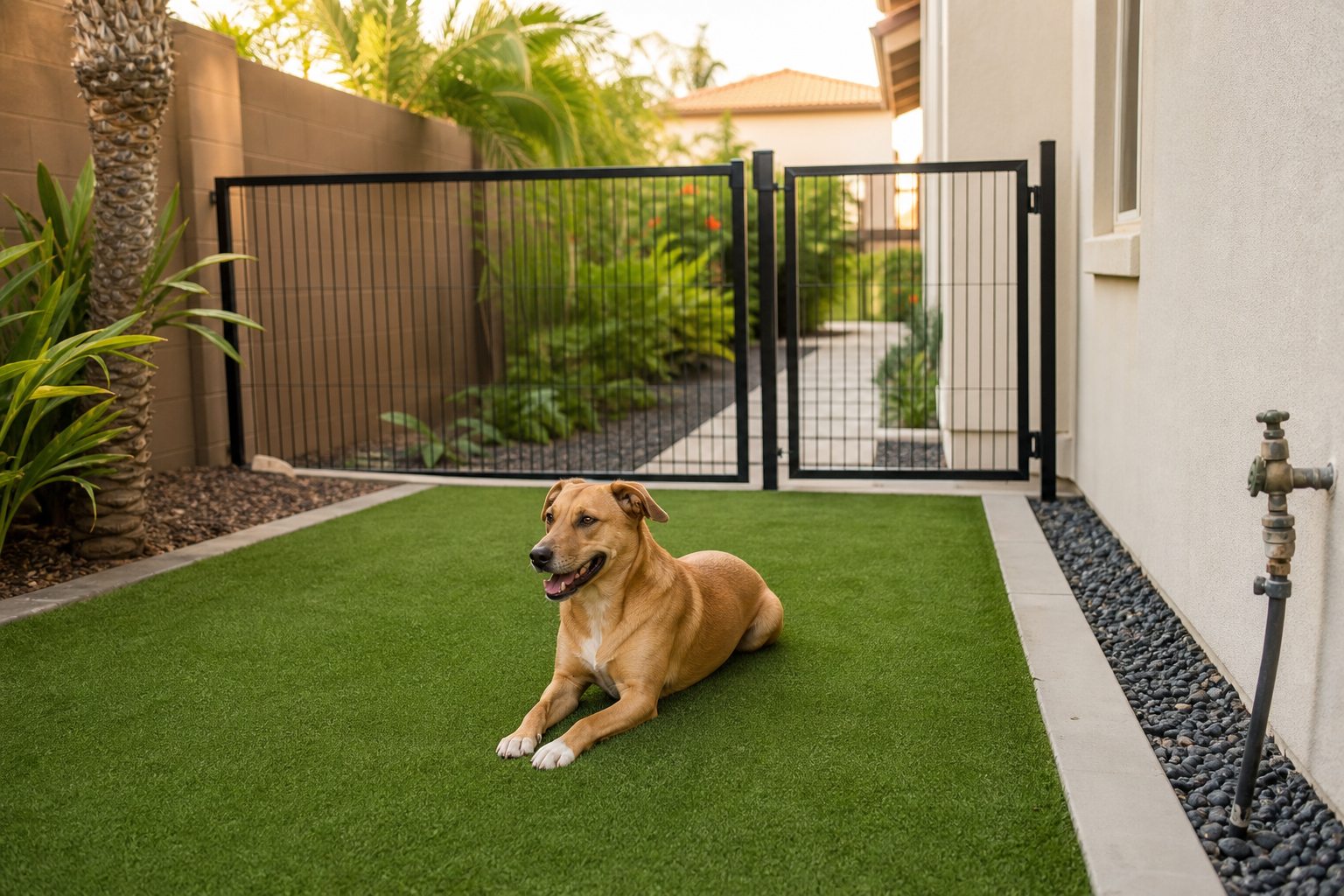
Artificial turf pet run with a gate and clear cleanup access

Design for animal use

Pet turf is an assembly and cleaning plan, not a product label

A pet area has different demands from a lightly used decorative lawn. Dogs may follow the same route to a gate, turn sharply near doors, dig at loose edges, and return to one relief area. The layout needs to account for those patterns while preserving an accessible route for solid-waste removal, rinsing, brushing, and periodic inspection.

Turf pile and backing are only part of the system. Water and rinse flow pass through the surface into the infill, base, and ground or drainage route below. If any layer holds moisture or if runoff has nowhere to go, changing the visible turf alone will not correct the underlying condition.
Pet routines and site conditions

Traffic, digging, shade, and existing drainage deserve an honest look

Pet-oriented turf can be useful in a defined run, side yard, relief zone, or shared backyard where cleanup access is straightforward. Pet size, number, activity, digging habits, preferred routes, and time spent outdoors help determine whether the area should be one continuous surface or a smaller zone connected to another yard material.

Existing urine concentration, damp soil, low areas, damaged irrigation, runoff from hardscape, and shade can all influence odor and drying. Before covering the ground, it is important to distinguish a surface-cleaning issue from a base or drainage issue. Persistent standing water or saturated soil may require correction beyond ordinary turf preparation.

Build the complete pet area

Preparation, secure boundaries, and drainage work together

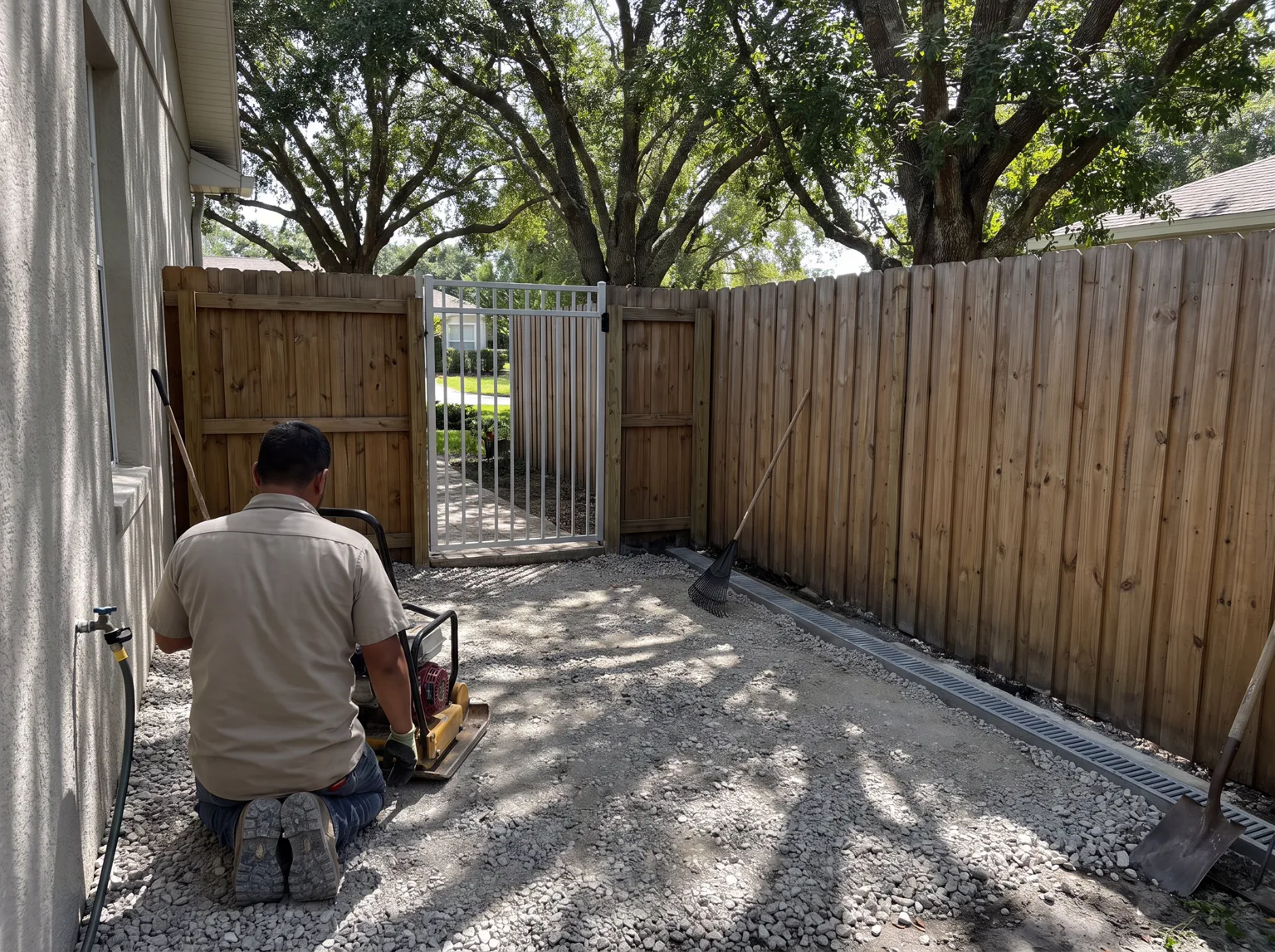
Existing vegetation, loose material, contaminated infill from an older installation, or an unsuitable surface is removed within the defined area. The grade is shaped so water does not collect against doors, fencing, patios, or foundations. A stable, compacted base supports the turf while preserving the drainage approach chosen for the actual ground and surrounding surfaces.

Seams are planned away from concentrated turning and digging zones when the layout allows. Perimeters near fences, gates, beds, and hardscape need secure restraint without trapping water. Turf and infill selections are considered as parts of the cleaning and drainage system, then the material is joined, trimmed, infilled, groomed, and checked for loose edges or inaccessible pockets.

Permeable aggregate base and drainage preparation in a fenced pet area.

Scope and daily expectations

The estimate should describe use, cleanup, access, and known trouble spots

A useful scope records the pet area, current surface, relief locations, gate and door routes, drainage concerns, hose access, shade, surrounding landscaping, and any digging or chewing behavior. It also identifies removal, disposal, base work, edge restraint, seam placement, turf, infill, transitions, and the condition in which nearby surfaces will remain.

Owners should expect to remove solid waste promptly and clean the surface as use requires. Turf does not make animal waste disappear, prevent every odor, or stop a determined dog from digging. A practical installation makes cleaning possible and reduces avoidable weak points, while ongoing results still depend on use, water movement, materials, and regular care.

Odor and drainage limits

A new surface cannot hide an unresolved moisture problem

Odor can come from residue at the fibers, infill, backing, base, soil, or nearby hardscape. Cleaning only the top layer may not reach material held deeper in an older assembly. Product labels and additives do not replace prompt waste removal, suitable rinsing, drainage, and access to the full area.

Where water already ponds, irrigation leaks, or runoff repeatedly enters a low enclosure, turf may not be the first correction. A drainage or irrigation issue may need separate work, and a small washable relief area may serve some households better than covering the entire yard. Material choices can support a care plan, but they cannot promise an odor-free surface under every use pattern.

Cleaning and inspection

Consistent waste removal matters more than occasional heavy treatment

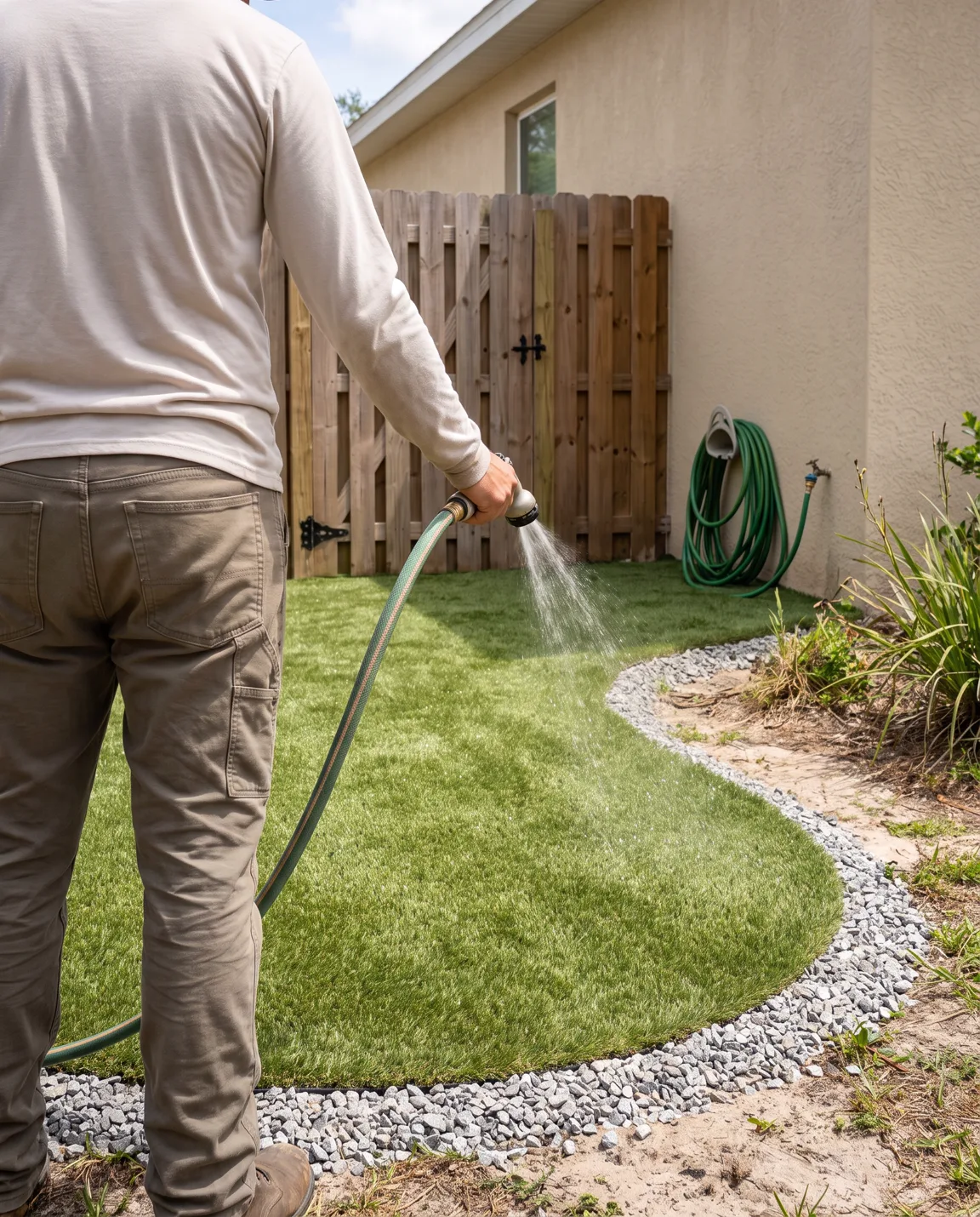
Solid waste should be removed before rinsing, and the affected area can then be cleaned according to the turf and infill guidance. Light, regular attention generally keeps material from building up in the fibers. Concentrated relief zones may need more frequent rinsing and brushing than open play areas, especially during dry periods or heavy use.

Routine checks should include seam edges, fence lines, gates, transitions, displaced infill, digging spots, soft base areas, and places that stay wet. A change in drainage or odor can point to a blocked route or deeper condition. Harsh chemicals, high heat, and unapproved equipment can damage materials, so care products and methods need compatibility with the installed system.

Artificial turf pet area with accessible gate and rinse connection.

Pet areas in Central Florida

Warm conditions and sudden rain make drying and water routes important

Deltona weather can shift from hot, dry exposure to a heavy downpour quickly. A pet run beside a house or fence may receive roof runoff, irrigation overspray, and limited air movement at the same time. The plan needs to preserve drainage and cleaning access rather than treating perforated backing as the entire water-management answer.

Shade can make a relief area more comfortable, but dense tree cover also adds leaves and organic debris that hold moisture. Pool decks, patios, and paved walks may shed water toward the turf edge. Those connections are reviewed as actual boundaries so rinsing and rainfall do not repeatedly move residue into a trapped low point.

Pet turf questions

How does pet-area drainage work through artificial turf?

Liquid passes through openings in the turf backing, then through infill and the prepared base toward the available drainage route. Each layer must remain compatible with that route. Permeable turf alone cannot correct settled soil, blocked outlets, leaking irrigation, or outside runoff.

Can pet turf prevent every outdoor odor?

No. Odor control relies on prompt solid-waste removal, appropriate rinsing, drainage, drying, and access to concentrated-use areas. Residue can remain in infill, base, soil, or nearby hardscape, particularly where moisture is trapped or an older installation is already contaminated.

What if a dog digs or runs the same path?

Those habits belong in the layout. Secure edges and thoughtful seam placement can reduce avoidable weak points, while base stability and infill support the surface. They do not make the material immune to persistent digging, chewing, or concentrated high-speed traffic.

What routine cleaning does a pet turf area need?

Remove solid waste first, rinse or clean affected areas according to material guidance, clear hair and organic debris, brush compressed fibers, and inspect seams, edges, infill, and drainage points. Relief zones often need more frequent attention than lightly used portions.

Can turf solve a yard that already stays wet?

Not by itself. The source and route of the water need to be identified. Grade correction, irrigation repair, drainage work, or a different surface may be necessary before turf becomes a reasonable finish for that location.

Ready to discuss this turf project?

Share the property details in an estimate request, or call to talk through the area and the work you have in mind.